
When people think about a new natural gas line going into the ground, pipe is usually the first thing that comes to mind. And for good reason. Plastic pipe is a major part of the system.
But anyone who works around gas distribution knows the pipe is only the beginning.
A new underground gas line is really a connected system of materials. Each product has a job to do. Some materials carry the gas. Some connect the line. Some help crews change direction or branch off to a service. Some make the line easier to find later. Others provide access after everything is buried, backfilled, paved, or landscaped.
That is what makes below-ground gas distribution so important. Much of the work disappears once the trench is closed, but the materials left underground keep doing their job for years.
GROEBNER works with natural gas utilities, contractors, municipalities, and crews who understand how much those details matter. A successful gas distribution project is not just about getting one part right. It is about understanding how the underground materials work together.
The Pipe Carries the Gas
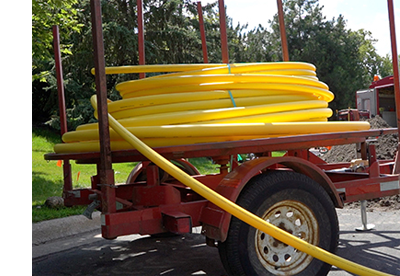
Let’s start with the obvious one.
Plastic pipe forms the main path for natural gas below ground. It may be used for mains, services, or other parts of the distribution system depending on the application. It is flexible, durable, and well established in natural gas distribution construction.
Common plastic pipe materials used in gas distribution include MDPE, HDPE, and PA12. Each has its own place depending on the project, utility standards, application, size, pressure requirements, and installation conditions.
The type of pipe matters, but a strong underground plastic gas line depends on more than pipe alone. It depends on the materials around it working together.
Fittings Connect, Branch, and Route the Line
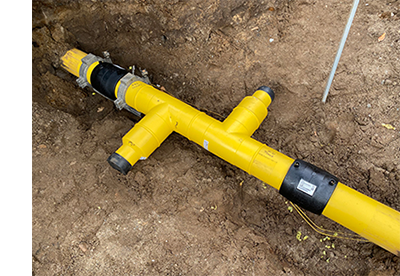
Fittings are where the underground system starts to take shape.
They connect sections of pipe. They help crews change direction. They create branches. They support service connections. They help adapt the layout in the field while keeping the system aligned with project requirements.
A polyethylene gas distribution project may include several types of fittings, such as butt fusion fittings, socket fusion fittings, electrofusion fittings, and mechanical fittings. The right choice depends on the application, pipe size, joining method, utility preference, and field conditions.
Common fitting categories may include elbows, tees, tapping tees, reducers, caps, couplings, and saddles.
Fittings may not take up much space compared to a long run of pipe, but they carry a lot of responsibility. Every connection matters. A well-planned material list accounts for those connection points before the crew is standing in the trench needing the right part.
Risers Bring the Service Above Ground
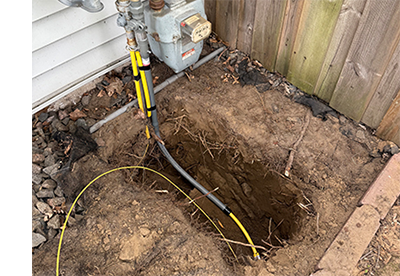
Most of the service line may live underground, but the service still needs to come up to the meter set.
That is where risers come in.
Risers help transition the underground service line to the above-ground service connection. Depending on the application, that may include anodeless risers, prebent risers, straight risers, stub ell risers, or other configurations.
This is one of those product categories that helps people see how the underground system connects to the visible parts of natural gas service. The customer may never see the pipe, fittings, tracer wire, or buried valve, but they do see the meter set. Risers help connect those two worlds.
They are also a good reminder that below-ground materials are not separate from the rest of the natural gas journey. They are part of the path that brings gas from the distribution system to the homes and businesses using it.
Valves Create Control Points
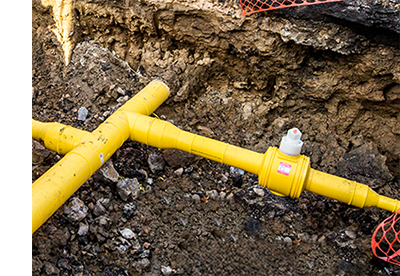
Valves are another important part of the underground material picture.
PE ball valves can be installed as part of the buried gas system to provide control points where flow needs to be managed. Depending on the system design and application, excess flow valves may also be included in certain service line installations to restrict flow under specific abnormal flow conditions.
Valves are not always the first thing people think about when they picture natural gas construction, but they matter. They help make the system more manageable and serviceable over time.
They also create another important need, because a buried valve has to be accessible after backfill. That is where valve boxes become part of the conversation.
Valve Boxes Keep Access Points Reachable
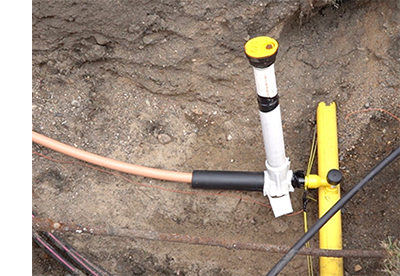
A valve underground only helps if crews can get to it later.
Valve boxes help maintain access from the surface to the buried valve. They are especially important after backfill, paving, landscaping, road work, or grade changes.
This is a practical part of the system that deserves more attention. The valve may be underground, but the need to operate or maintain it does not disappear. Valve boxes help keep key control points reachable when crews need them.
Tracer Wire Helps Crews Find the Line Later
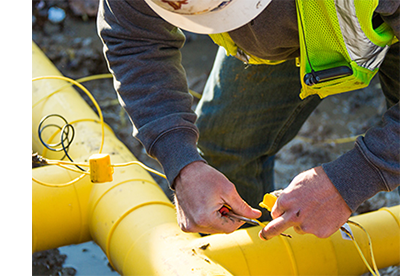
Some of the most important materials installed with plastic gas pipe do not carry gas at all.
Tracer wire is a great example.
Because plastic pipe is non-metallic, it needs help being located after it is buried. Tracer wire is commonly installed with plastic gas pipe so crews can locate the line in the future. Tracer wire connectors help maintain continuity in that locating system, while tracer wire test stations provide a place to bring the signal connection above ground when crews need to locate the buried line.
Burial tape or warning tape can also be installed as part of the underground identification system, providing a visual warning during future excavation.
This part of the system is easy to underestimate because it is not part of the gas-carrying path. But ask anyone who has had to locate a buried facility years after installation, and they will tell you how important it is.
Bringing the Underground System Together
Natural gas distribution projects involve a lot of moving pieces. Crews need the right material at the right time. Buyers need dependable sourcing. Project managers need fewer surprises. Utilities and contractors need support from people who understand how the materials are actually used in the field.
That is where GROEBNER can help.
GROEBNER makes below-ground gas distribution easier to understand, easier to source, and easier to support. Instead of piecing together pipe from one place, fittings from another, tracer wire from somewhere else, and valves from yet another supplier, customers can work with one knowledgeable natural gas partner.
We know where the products go. We understand why they matter. And we are here to help you find the below-ground products that keep the work moving.