
A natural gas service line does not end when the pipe reaches the building.
Our look at below-ground natural gas distribution followed the materials that carry gas underground, including PE pipe, fittings, valves, tracer wire, risers, and the other pieces that help bring the service line toward the customer.
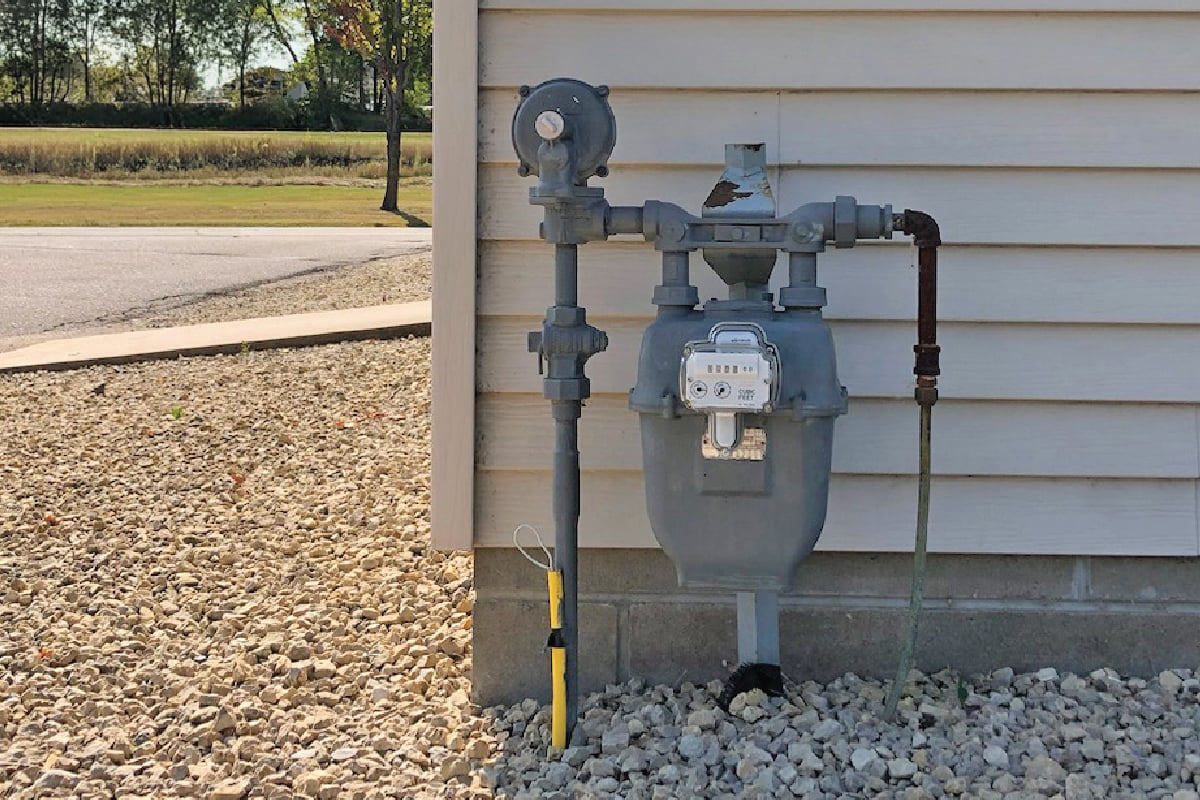 Now, we are picking up the journey where that story left off.
Once the service reaches the riser and comes above ground, the meter set starts to take shape. This is where the system needs to shut off the gas when needed, control pressure, measure usage, connect the equipment, and communicate meter information.
You probably recognize the gas meter hanging outside a home, but there is a lot more working around it.
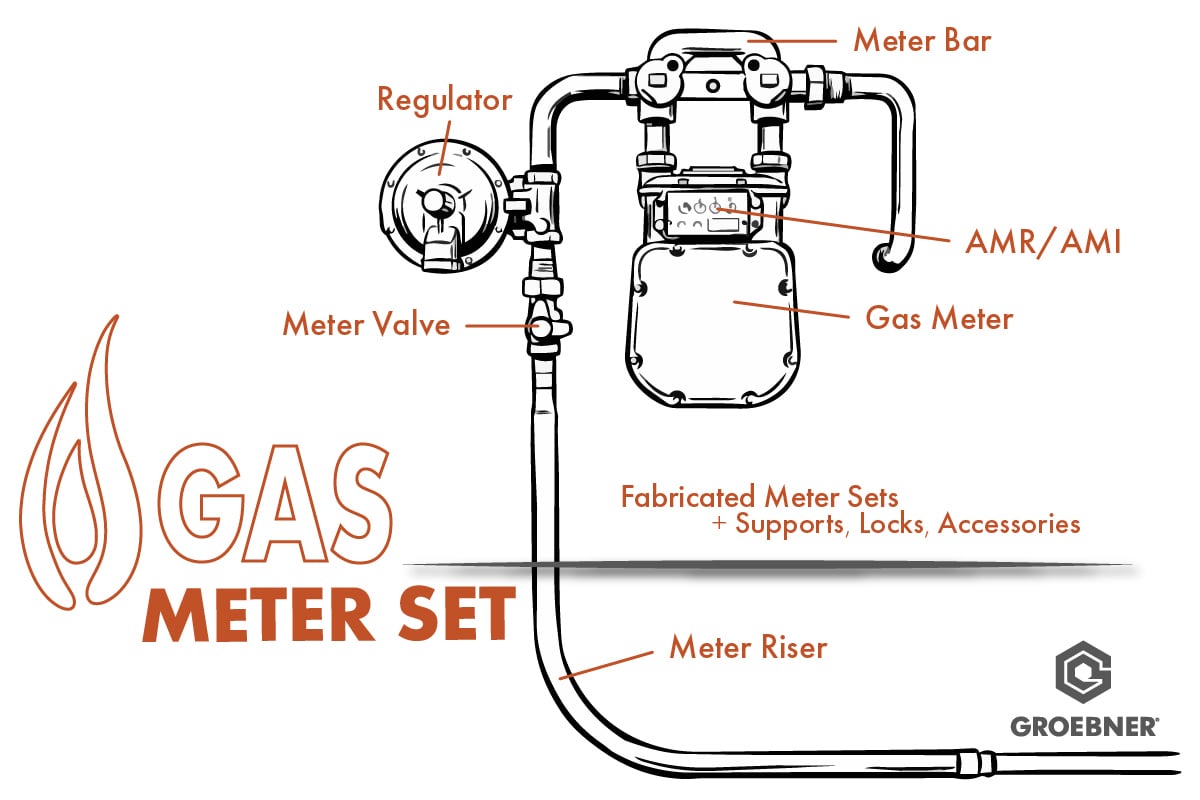
Here is a closer look at the pieces that come together to make up a residential natural gas meter set.
Shut Off the Gas with Valves
 Once the service is above ground, there needs to be a way to stop the flow of gas when needed.
Meter valves provide that shutoff point near the meter set, giving crews a way to isolate the gas supply for service, maintenance, or emergency situations.
It is a simple but important part of the setup, giving you a way to control the gas supply before it reaches the customer.
Regulate & Meter the Gas
Getting natural gas to the meter set is only part of the job. The system also needs to deliver it at the appropriate pressure and measure how much gas is being used.
A gas regulator reduces and controls the incoming pressure, so the downstream system receives gas at the pressure required for the application. Residential regulator configurations can vary depending on service pressure, installation requirements, utility standards, and relief or other overpressure protection may also be part of the setup.
Residential diaphragm meters are a familiar sight outside homes and are designed to measure gas usage as it moves through the meter set. Meter size and configuration can vary depending on the amount of gas the home is expected to use and the requirements of the utility.
Together, the regulator and meter handle two of the meter set’s most important jobs by controlling pressure and measuring usage.
Explore Residential Gas Regulators | Explore Residential Gas Meters
Connect the Pieces
A regulator and meter cannot simply sit next to each other. They need the right connections and configuration to work together.
Meter bars and connections help tie the system together between the riser, regulator, meter, and downstream connection. Bypass meter bars can also help keep gas service flowing while work is being done on the meter, reducing the need to interrupt service.
Fabricated meter sets can simplify the work even further by bringing components together in a standard or custom configuration before they reach the jobsite. Using a more consistent design can make installations more familiar from house to house and give crews fewer variations to work around. GROEBNER offers residential fabricated meter sets in custom configurations and a range of sizes.
These may not be the most noticeable parts of the system, but they are what help bring everything together into a complete working setup.
Explore Meter Bars & Connections | Explore Residential Fabricated Meter Sets
Capture the Meter Data Remotely
Reading a gas meter no longer means someone has to walk up to it and record the number.
Automated Meter Reading (AMR) and Advanced Metering Infrastructure (AMI) give you more efficient ways to collect meter information.
The technology and level of communication can vary, but both help move meter data beyond the physical meter itself. That information can support billing, operations, and your overall meter reading strategy.
This is an important evolution in the meter set story. The meter still does the measuring, while AMR and AMI help you access that information and put it to use.
Support & Protect the System
Once everything is connected, the meter set still needs to be supported and protected.
Support brackets and posts help hold piping and meter set components in place so the weight and stress are not carried by the meter itself.
Valve and meter locks help control access to equipment and protect against unauthorized operation or tampering.
Other accessories help protect the meter set from weather and everyday hazards. Ice guards, meter boxes, and similar products may be used depending on the location, climate, and installation.
These pieces may not control pressure or measure gas, but they help protect and support the equipment that does.
Explore Support Brackets & Posts | Explore Valve & Meter Locks | Explore Measurement Accessories
Every Setup Looks a Little Different
The residential meter set gives us a good way to understand the basics, but there is no single meter set configuration that fits every application.
A home may require a relatively straightforward combination of a riser, shutoff valve, regulator, meter, connections, and communication equipment.
A school, warehouse, commercial building, or industrial facility may need to handle much larger gas loads, different pressures, or more sophisticated measurement requirements.
Those added demands can call for a different mix of equipment, including:
- Different types of gas meters (commercial, rotary, turbo)
- Larger gas regulators (commercial, industrial, farm tap)
- Relief and safety shut-off valves
- Breakaway valves for added protection
- Chart recorders and other measurement instruments
- More complex fabricated meter sets
The individual components may change, but the basic jobs stay the same. You still need to control the gas, regulate pressure, measure usage, connect the equipment, and capture the information needed from the system.
Bringing It All Together
Looking at a finished gas meter set, it is easy to focus on the meter itself.
A closer look tells a much bigger story.
The riser brings the service above ground. Valves provide a way to shut off the gas. Regulators manage pressure. The meter measures usage. Connections bring everything together. AMR and AMI help communicate meter information, while supports, locks and protective accessories help keep the system secure and supported.
Each product has a role, and they all need to work together as part of the complete application.
That is where having a partner who understands natural gas can make things easier.
GROEBNER helps you source the products that make up a meter set while also providing the product knowledge to help you understand how everything fits into the larger natural gas distribution system.
You do not have to piece the system together alone. We know where the products go, why they matter, and how they work together.
The meter may be the part everyone recognizes, but it takes a lot more than a meter to complete the journey to the customer.